Social Sciences | Arts and Humanities | Physical Sciences | Life Sciences | Mathematics
Political Economy
Political Economy is the foundation course for a deeper understanding of economic life and government's role in it. It introduces students to economics and economic policy-making and explores the fundamental principles of capitalism. The course connects capitalist economic decision-making to both political liberalism and religious and cultural practices. Students learn fundamental economic terms and concepts as they explore the development of modern economies.
Global Perspectives
Global Perspectives aims to orient the student toward contemporary problems in the world. Themes may include intercultural communications, globalization and development, international relations, and global social issues such as AIDS, poverty, or environmental degradation. The course studies how information gets transmitted from one person to another and tries to explain specific communication processes. It helps the student become more conscious of how people can converse across cultures and ethnicities, step outside of their own experiences, and appreciate the positions of citizens from a variety of origins.
Democracy and Justice
Democracy and Justice examines the ideas of leading thinkers in the history of political thought and the questions they raise about the design of the political and social order. It considers the ways in which these thinkers have responded to the particular political problems of their day, and how they contribute to a broader conversation about human goods and needs, justice, democracy, and the relationship of the individual to the state.
Your Question
"The Question" is a foundation block that helps shape students' education in the concentration years of their program. With the course tutor and a prospective advisor, students work independently in this block to structure the various aspects of their individual concentration program for their 3rd and 4th years at Quest. The course will consider the role of the Foundation courses, experiential education, co-curricular programs, foreign language, study abroad, and research methods in developing a plan for the final years at Quest.
Fate and Virtue
The first course of the integrated Humanities foundation series asks the fundamental question, "How we should live our lives?" "Fate and Virtue" takes up Ancient Greek texts in philosophy, history, and imaginative literature. Philosophy, Socrates claimed, is a kind of training for death. We are all fated to die, but some of us will lead better lives than others. Is the best life a matter of fate, and thus out of our control, or is it a life of virtue, and thus within our control? Through coming to grips with the related concepts of fate and virtue we will better understand both contemporary and Ancient views regarding the good life. Authors include Homer, Plato, Aristotle, Thucydides, and Aristophanes.
Reason & Freedom
The second course of the integrated Humanities foundation series emphasizes the foundations for, and the problems with, making moral choices in the modern world. "Reason & Freedom" develops for students the self-conscious nature of modernity and its belief in reason, and explores the paradoxes of our position in history. The course explores how we ground our morals, on the one hand, and whether reason finally guides our choices of doing good or evil. The readings in philosophy, history, and literature help students gain an appreciation of ethical behavior and of the place of considered action in the world. Authors include Brecht, Kant, Hegel, Nietzsche, and Dostoevsky.
Identity and Perspective
The third course of the integrated Humanities foundation series emphasizes the foundations for, and the problems with, our modern sense of our unique individuality. The sense of self and the intrinsic value of the individual are deeply cherished legacies of Western civilization, and they ground many of our contemporary values. Using the insights of history, philosophy, art, and literature, the class makes the "self" a topic for reflection and discovery. Authors include Locke, Freud, Fussell, Faulkner, Heidegger, Sartre, and de Beauvoir.
World Religions
Religions - such as First Nations, Hinduism, Buddhism, Confucianism, Sikhism, Shinto, Judaism, Christianity, and Islam - offer distinctive perspectives on important issues in our university curriculum. To identify these issues, students examine a selection of religious foundational texts, historical developments, and contemporary practices. The study of religion at Quest aims to understand the unique characteristics of different religions; to articulate the principles of a responsible and objective study of religion; and to explore the dynamic interaction of religion and culture in its diverse expressions.
Dimensions of Music
Music - the practice of ordering tones successively or simultaneously in rhythmic temporal relationships - has served in all known cultures as a means of social bonding and identity creation, and as a powerful medium for the communication of ideas and emotions. In this course, students develop a vocabulary for discussing music before exploring topics such as the nature of music and its psychological effects; the history of Western classical music, jazz, and rock; the traditional music of non-Western cultures; and the roles of music today in social conflict and rehabilitation. Students also have the opportunity to create and perform their own compositions.
Astronomy /Physics
Science began with the study of the heavens. Our knowledge of the physical world has often worked from what we know of the stars and planets toward a more local scale. Modern astronomy, by contrast, often goes from an understanding of atomic structure to theories of the behaviour of objects on the astronomical scale. Depending on the block, this course might emphasize the historical development of astronomy, its modern basis in physical theory, or some other relevant focus.
Earth-Oceans-Space
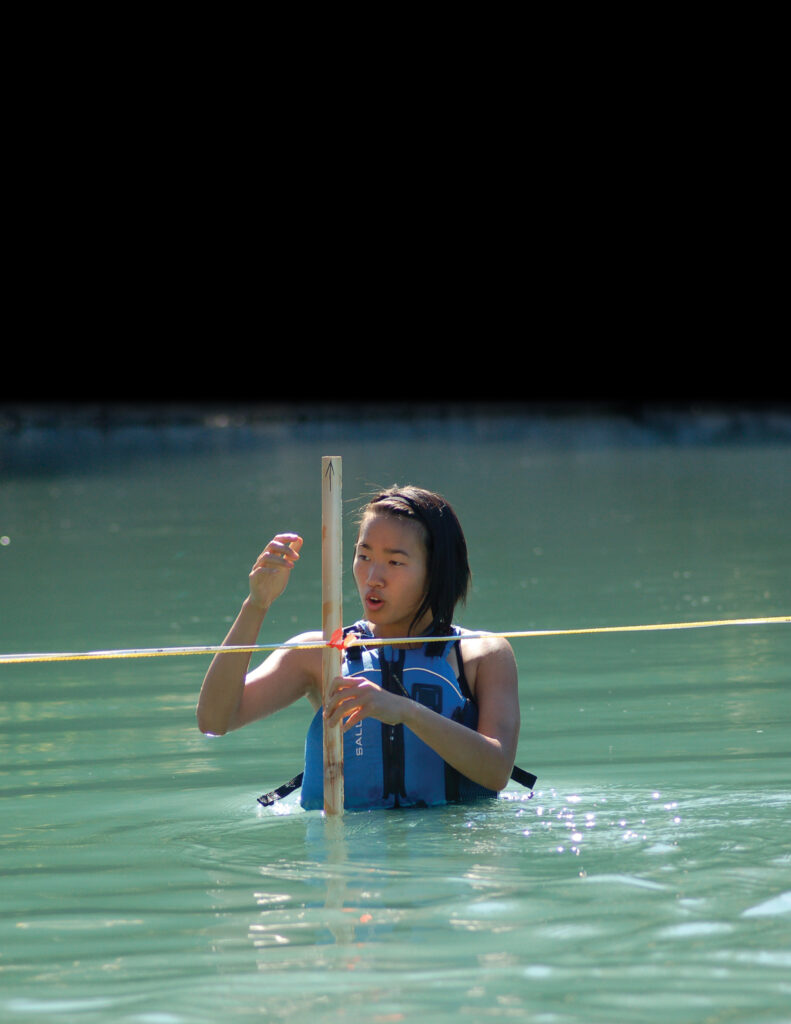
This course introduces students to the workings of different aspects of the Earth system, from the Earth's core to its outer atmosphere, and emphasizes their inter-relationships and the connections between our planet and our species. Quest's unparalleled location allows us to use the Coast Mountains, the Squamish river basin, and Howe Sound as natural laboratories. The course relies heavily on field trips, first-hand observations, real geophysical datasets, satellite images, and remote observations of the Earth and other planets. Topics may include the co-evolution of life and the atmosphere, formation of the planetary bodies, plate tectonics and climate, the carbon cycle, and natural resources including water, energy, and materials.
Energy and Matter
This course introduces students to two of the most powerful intellectual achievements in the physical sciences: thermodynamics and quantum mechanics. Thermodynamics was articulated in the mid to late 19th century, but still forms the fundamental basis for modern work in chemistry, materials engineering, atmospheric physics, among other fields. Quantum mechanics and quantum chemistry frame our understanding of how observable material properties follow from fundamental first principles. Beyond introducing students to some of the most powerful sets of ideas in the history of science, this course applies these ideas to the frontiers of science today, including nanotechnology, computer science and developing sustainable sources of energy.
Case Studies in Molecular Biology
(Pre-requisite: None)
This course fulfils the requirement of a Molecular Biology Foundation block and is geared toward students without a significant background in science. In this introductory course, we explore topics in cellular and molecular biology (cell structure, gene expression, and evolution). Case studies based on clinical and scientific reports are used to explore how the theory links to real life, and will introduce students to the process of analyzing a biological problem in order to resolve it. We will also engage in seminar-style discussions which consider the critical role of mitochondria in shaping the function, evolution, and metabolism of the eukaryotic cell.
Frontiers in Molecular Biology
(Pre-requisite: BC High School Biology 11, IB Biology, AP Biology, or equivalent)
This course fulfils the requirement of a Molecular Biology Foundation block and is geared toward students with an introductory background in gene expression. In this course, students become comfortable with the use of the primary research literature as we explore the current frontiers of knowledge in molecular biology. Students analyze and discuss papers, come up with their own conclusions, design the next experiment that the paper suggests, and present their proposals to a peer-review grant panel. Possible topics include epigenetics, RNAi, hox genes & development, horizontal gene transfer, DNA microarrays, and mobile genetic elements.
Neurosciences
This course examines the brain, from molecules to whole networks, in order to understand a network that has more possible connections than there are particles in the universe. We look at brain function mapping, the mechanisms of learning memory, language acquisition, and perception. We use our own bodies in fun (and harmless) experiments to demonstrate how the nervous system works.
Ecology
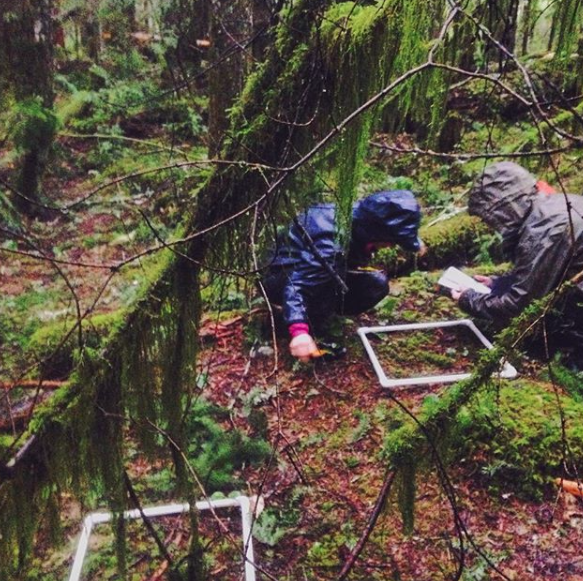
In this course, students study the relationships between organisms and their environment and learn fundamental ecological methodology, hypothesis formulation, and scientific writing. Specific ecological topics covered in this course include biogeochemical cycling, ecological niches and habitats, population processes, carbon sequestration, and the effects of climate change on ecosystems and organisms. These topics are examined in relation to local and global environmental issues.
Students take one of the following courses in mathematics:
Mathematics: A Historical Tour of the Great Civilizations
Mathematics is the oldest of the liberal arts, yet few are aware of its vast and subtle influences on our lives. It is a practical tool, to be sure, but also it has played a major role in shaping who we are and how we think. Historically, mathematics has helped end old regimes and modes of thought, and constructed new ones. This course takes a grand tour through the dominant mathematical cultures: ancient Babylon and Egypt, ancient Greece, medieval Islam, pre-modern China, and Europe today. We discover how mathematics shaped, and was shaped by, the people who practiced it, how it interacts with worldviews and alters ideas.
Modeling Our World with Mathematics
Mathematics underlies almost every modern human activity. It permeates our scientific understanding of the physical world, and affects our social actions by shaping public opinion and consumer and business decisions. The process that turns reality into mathematics and back — modeling — is the engine that drives our analysis. We begin with the use of functions to model continuous change: linear and exponential functions for food production and population growth, trigonometric functions for periodic events, statistical distributions for behaviours of large groups, and so forth. We then examine discrete phenomena: graph theory for networking, coding and cryptography, elections and voting paradoxes, game theory, and the prisoner's dilemma.
Spherical Trigonometry
Born from the study of celestial motions in ancient Greece, spherical trigonometry became a standard part of the repertoire of mathematicians, astronomers, and navigators until it was almost forgotten in the late 20th century. This course will take a primarily mathematical view of this beautiful subject, bringing in astronomical history to provide context. Topics include the properties of a spherical triangle, both right and oblique; Menelaus's Theorem; the Rule of Four Quantities; the Law of Sines; Delambre's and Napier's analogies; duality; areas and the spherical excess; relations to plane trigonometry; applications to polyhedra; and the role of stereographic projection.
Visual Mathematics
The human sense of sight has played a fundamental role in shaping the evolution of mathematical thought throughout the ages. Whether used for understanding mathematical patterns, solving challenging problems, or creating beautiful and fascinating images, visual ideas and methods are fundamental to the insight and intuition at the heart of mathematical thinking. In this course we expand our senses of perception as we tour a variety of mathematically rich visual vistas, from proportion and mathematics in art, to the rich patterns of fractals, to the mystery of the shape of the universe.